
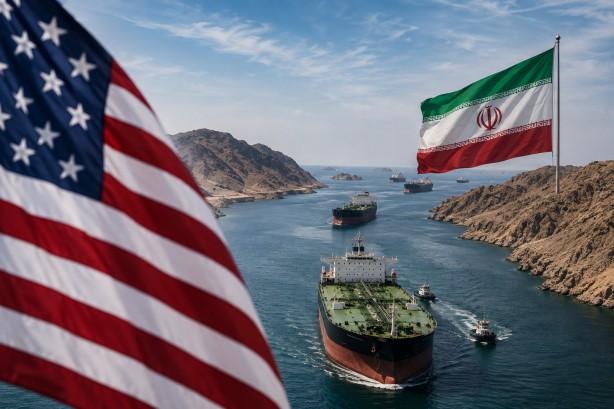
Negotiations between the United States and Iran regarding the reopening of the Strait of Hormuz are reportedly making significant progress, with an agreement on the horizon potentially within the next couple of days. US Treasury Secretary Scott Bessent has indicated that talks with Tehran are ongoing and expressed a hopeful outlook for a resolution. The proposed agreement aims to allow commercial vessels to navigate through the vital waterway without incurring toll charges, thereby maintaining the principle of freedom of navigation.
Qatar has played a crucial role as a mediator in these discussions, confirming that a de-escalation framework is being shared among the involved parties as diplomatic efforts persist. The Strait of Hormuz holds immense importance as a conduit for global oil and energy transportation, and recent tensions in the region have severely disrupted this critical trade route. The anticipation of an agreement has already led to a decrease in oil prices, with analysts predicting further drops if normal shipping operations resume.
Amid these developments, President Donald Trump announced that he has postponed planned military actions against Iran to allow more time for negotiations to unfold. He emphasized that any forthcoming agreement should not only focus on reopening the Strait of Hormuz but also address concerns related to Iran’s nuclear program. The strategic passage has been a focal point of US-Iran tensions, with previous attempts to reach a consensus faltering due to disagreements over shipping routes.
The current negotiations aim to establish a new accord that would facilitate the restoration of maritime traffic and contribute to reducing instability in the region. The breakdown of a previous understanding between the US and Iran over the waterway had heightened tensions, underscoring the need for a sustainable solution. The successful reopening of the Strait of Hormuz would mark a significant step in easing geopolitical strains and ensuring the steady flow of oil shipments worldwide.