
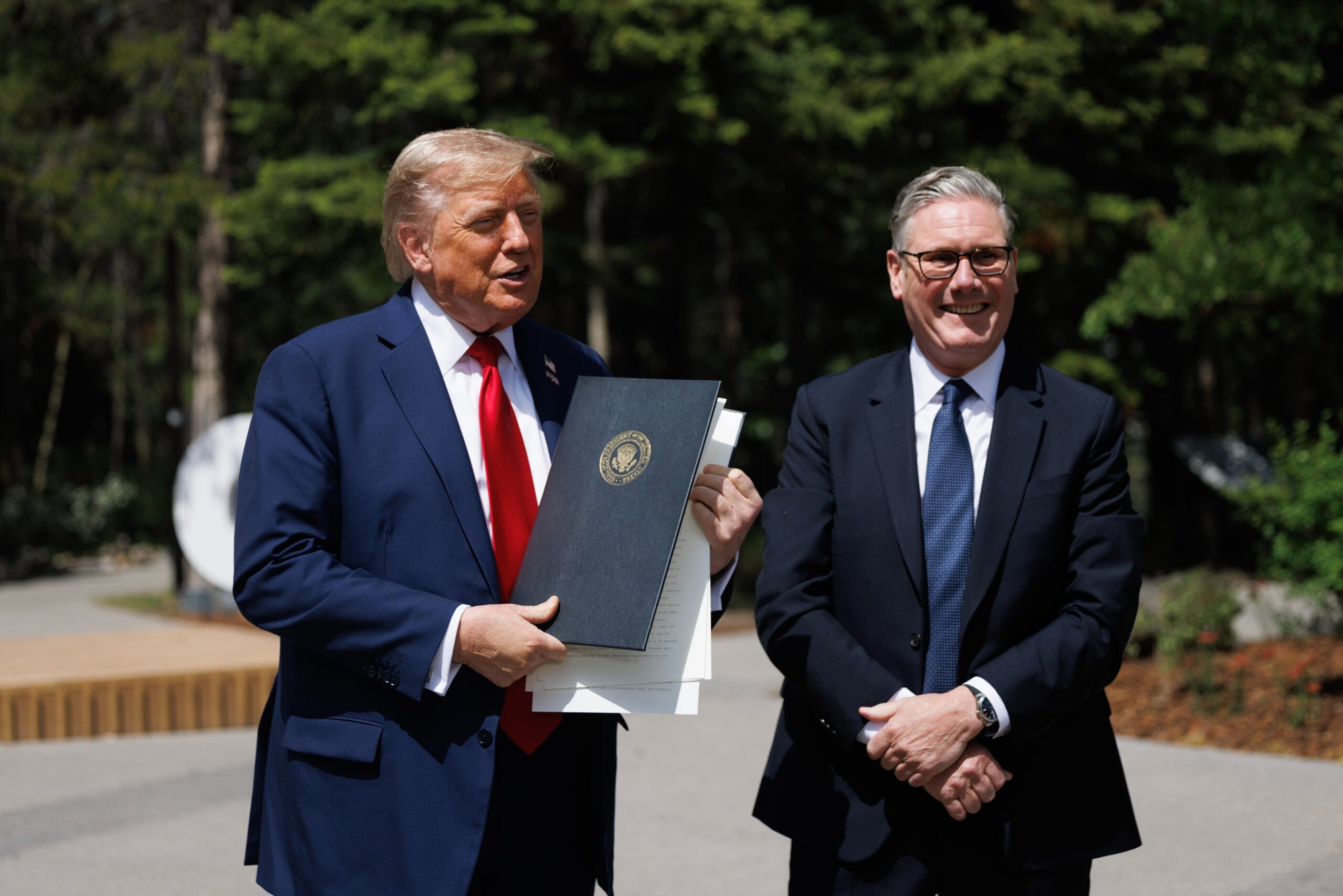
A diplomatic standoff unfolded in London as President Donald Trump and Prime Minister Keir Starmer took opposing positions on the future of Palestine. Trump’s firm restatement of U.S. opposition to unilateral recognition clashed directly with the UK’s new policy, creating a moment of high tension between the key allies.
President Trump made it clear that the U.S. will continue to adhere to its long-standing policy: no recognition without a negotiated peace deal. His administration believes that any other course of action undermines the principle of bilateral negotiations and pre-judges the outcome. This stance was recently demonstrated when the U.S. stood alone against a UN General Assembly resolution that was supported by an overwhelming majority of nations.
Prime Minister Starmer, walking a fine diplomatic line, defended the UK’s planned recognition as a strategic move to invigorate the peace process. He described it as a “catalyst,” not an endpoint, designed to create a new political reality conducive to a final settlement. The British argument is that the status quo has failed and a new approach is urgently needed.
This standoff highlights a fundamental divergence in strategy. The U.S. strategy is to use the promise of statehood as the ultimate incentive for peace. The new UK strategy is to use the act of recognition as an immediate incentive to restart meaningful peace talks.
The state visit provided an unusual platform for this disagreement to be aired so openly. While Starmer has postponed the recognition to maintain a cordial atmosphere, the policy rift is now a matter of public record. The incident signals a significant shift in UK foreign policy and presents a new challenge for the future of the transatlantic alliance.