
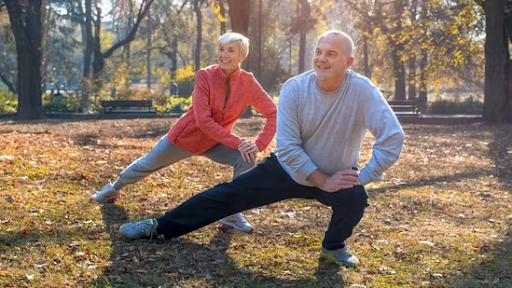
Modern exercise science is increasingly recognizing the importance of fascia—the connective tissue network that surrounds and supports every muscle, organ, and structure in the body. One movement educator has been ahead of this curve for thirty-five years, practicing and now teaching an exercise technique that specifically engages fascial tissues alongside ligaments and tendons to create sustainable, beneficial movement for mature adults.
The practice begins with what’s termed the Qi Machine, a rhythmic bouncing movement that starts in the lower body but ultimately engages the entire system. From a stable stance with feet shoulder-width apart, practitioners learn to create a specific knee bounce that shifts the workload from muscles to connective tissues. This involves dropping body weight through the legs and allowing elastic structures to catch and rebound the body upward.
The significance of this shift cannot be overstated. Muscles, while powerful, fatigue relatively quickly and produce metabolic waste products that contribute to soreness and exhaustion. Fascia, ligaments, and tendons function differently—more like elastic bands that can store and release energy efficiently without the same metabolic cost. By learning to engage these tissues as the primary movers, practitioners can sustain the movement longer and with less overall fatigue.
The technique’s sophistication becomes apparent as it evolves from simple leg bouncing to comprehensive full-body integration. With proper timing, arms naturally incorporate into the rhythm, the spine begins moving in fluid waves, and breathing synchronizes automatically with the motion pattern. This creates what practitioners describe as the body “breathing the movement”—a state where physical motion, respiration, and mental awareness all align without conscious effort.
For older adults, this fascia-focused approach offers several specific advantages. It maintains and improves circulation without excessive cardiovascular strain. It mobilizes joints gently while still providing meaningful stimulus for maintaining range of motion. It builds coordination and body awareness that translates to better balance and movement quality in daily life. Perhaps most importantly, it represents a sustainable practice that can continue delivering benefits throughout the aging process.