
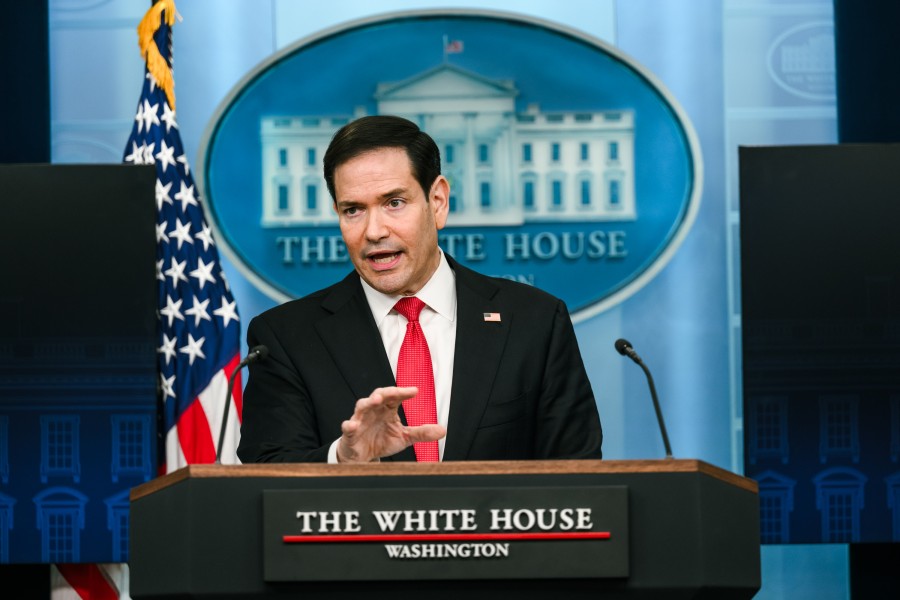
US Secretary of State Marco Rubio is currently engaged in discussions with Gulf allies regarding a proposed $300 billion Iran reconstruction fund, with regional partners expressing apprehension that the initiative might enable Tehran to rebuild its military strength. These talks come amid a broader context of regional unease following a recent agreement aimed at resolving the prolonged US-Israel conflict with Iran. Rubio’s arrival in Abu Dhabi marks the beginning of a series of meetings with Gulf leaders, where he intends to address lingering concerns about the deal and other outstanding issues.
The idea of establishing a reconstruction fund for Iran has sparked significant debate among US allies. There is an underlying fear that the financial assistance could be diverted towards enhancing Iran’s military defenses. Additionally, Gulf nations are troubled by the agreement’s failure to tackle Iran’s ballistic missile program, a key security concern for the region. Countries such as the United Arab Emirates and Kuwait, which have experienced attacks during the recent conflict, have voiced their worries. These nations, which host crucial US military installations, are seeking stronger assurances to safeguard against potential future threats.
Rubio’s diplomatic efforts are occurring as the United States strives to secure backing for the agreement while simultaneously addressing the criticisms raised by regional allies and some lawmakers. The delicate balance of maintaining support for the peace deal, while ensuring the security concerns of Gulf countries are adequately addressed, forms a core aspect of his mission. The Gulf leaders, who have been proponents of ending the conflict, remain wary of the agreement’s terms and the potential implications for regional stability.
This diplomatic engagement underscores the complexities of navigating international agreements that have far-reaching security implications. It also highlights the intricate web of alliances and concerns that the US must manage in its foreign policy initiatives. As discussions unfold, the focus remains on finding a path that reconciles the goal of peace with the imperative of ensuring regional security and stability.