
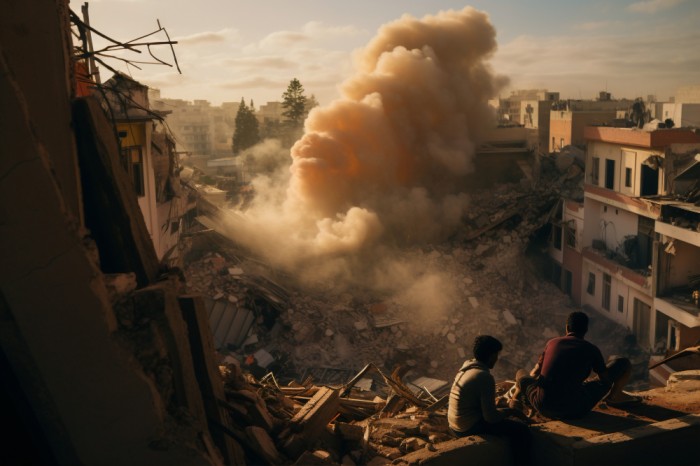
Amid escalating tensions between the United States and Iran, a new wave of military exchanges has sparked concerns about the potential for a broader conflict in the Gulf region. In a recent move, the US military initiated strikes targeting Iranian infrastructure, including air defense systems, drone facilities, and surveillance networks. This action was a direct response to an earlier attack on a commercial vessel navigating the Strait of Hormuz, a critical conduit for global energy supplies. US officials emphasized that the strikes aimed to deter Iranian threats in this strategic channel.
In retaliation, Iran’s Islamic Revolutionary Guard Corps launched missile and drone attacks on military facilities associated with the US in Kuwait and Bahrain. Iran reported that several targets, including a US air base in Kuwait and a naval installation in Bahrain, were successfully hit, although these claims have not been independently verified. The governments of Kuwait and Bahrain subsequently issued security alerts, detecting incoming missiles and drones, which led to the activation of defense systems and advisories for residents to seek safe shelter.
The recent hostilities have fueled fears that the tenuous ceasefire between Washington and Tehran could unravel. This exchange is reminiscent of previous confrontations over the Strait of Hormuz, which has frequently been at the heart of US-Iran tensions. As a vital artery for the transport of oil, the waterway’s stability is crucial to global energy markets, heightening the stakes of any military engagement in the area.
US President Donald Trump has accused Iran of breaching the ceasefire agreement, warning that continued provocations could lead to further military responses. Meanwhile, Iran has shifted the blame onto Washington, accusing it of escalating the situation and breaking past agreements. As both nations continue to exchange accusations, the prospect of de-escalation remains uncertain, raising the specter of increased instability in the region.